

A small thing happened about six weeks ago. An academic reported a single finding at a relatively obscure conference, one of thousands that day in a sea of millions of papers this year. The difference is that this result is special. It affects all the others: Are academic scientists honest?
If you’re familiar with the way that academic scientists study other academic scientists these days, some of what follows will seem normal but I’ll say it anyway. She reported three findings on a slide. On the third one, the direction was left off. The finding was that academic and non-academic researchers differ in their integrity according to her poll.
I asked anonymously in which direction they differed. Did academics or non-academics have more integrity? My question was ignored throughout the program. They even checked off the other questions to show which ones were answered.
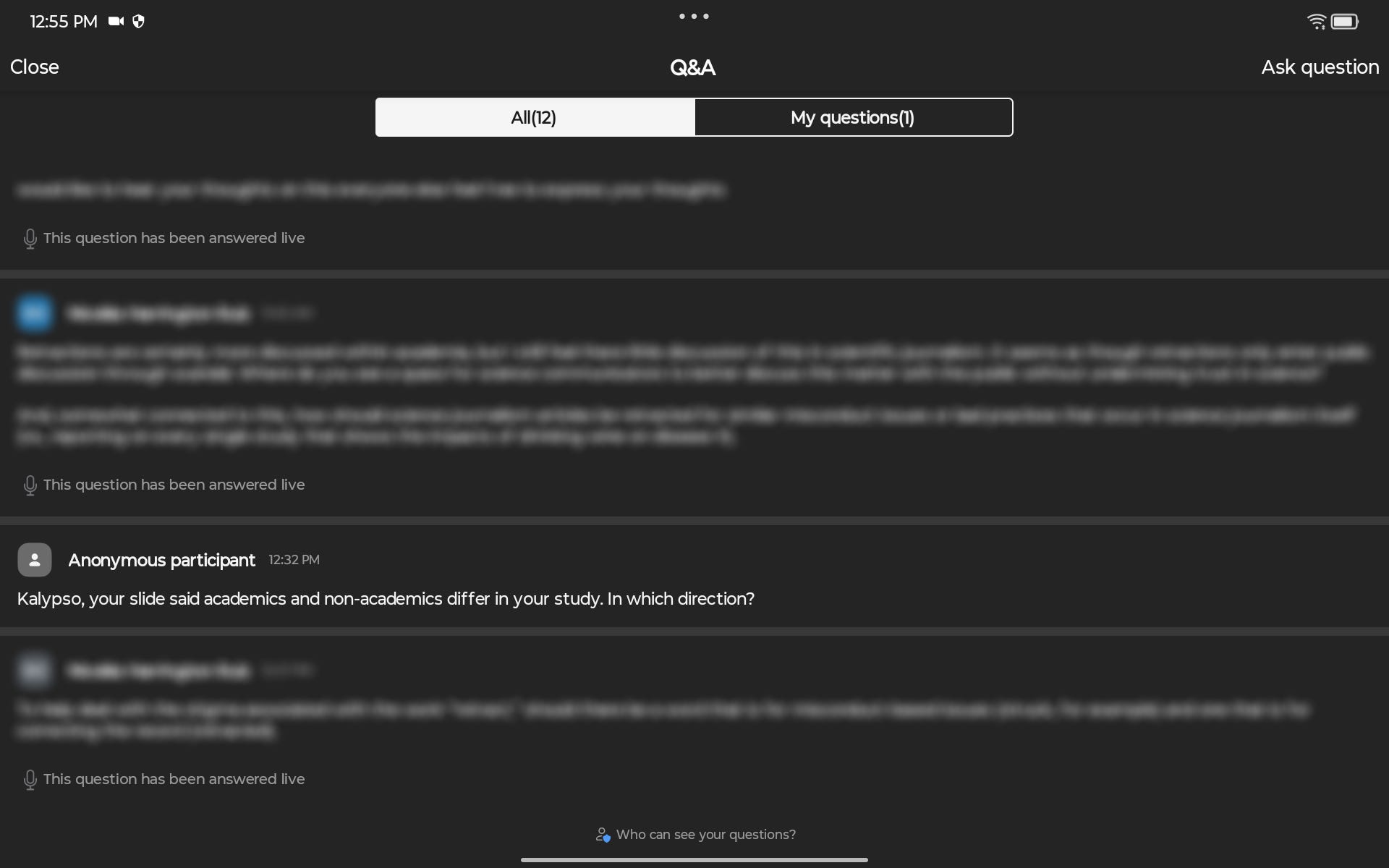
The next day, the long wait for the conference videos began. First they were sent so you couldn’t see them if you’re not at University of Helsinki. Then, after repeated requests, most of the videos were uploaded but this wasn’t one of them. Then the rest were promised last week.
Little did I know, the variable wasn’t reported anywhere else, but it hardly mattered. The full study had been released in an obscure PDF on the BEYOND project’s web site and it is such a cornucopia of academic researchers behaving badly and being covered by others that it renders the answer moot.
The poll
The BEYOND project polled 634 researchers with scenarios like, “A funder asks you to change your results…” For each scenario, respondents have four options that they’re asked to agree or disagree with. Comply and delete the findings, don’t delete them, et cetera.
In each scenario, the participants reliably disagreed with the worst option. However, the things they said they would do instead are quite shocking and, true to the pattern I’m trying to establish, the BEYOND project papered over how bad it looks by coding all but the worst behavior as “high integrity.”
In one scenario, a finding depends on removing a control variable from the analysis, a classic no no. A significant number of respondents said they would remove the variable and “look for scientific arguments for doing so” afterward. This was called a “high integrity” activity in the report.
Another scenario asks what you would do if you found a mistake in your own published paper. A significant number of people agreed with the option to discuss the issue with a supervisor and follow their advice regardless of what it was. In fact, there was significant agreement in three places in the poll to privately tell other researchers about errors and simply let it go depending on what they say.
Other “high integrity” options are worthy of Machiavelli:
1. Doing some alternative analyses, finding they don’t support the hypothesis, and then listing “reasons why performing these additional analyses would be inappropriate” in the paper.
2. Revising a paper at an editor’s request such that the hypothesis is based on a different explanation after the fact.
3. Arguing with reviewers about including variables you secretly know aren’t significant.
As bad as these are, responses hovered around “neither agree nor disagree” on average.
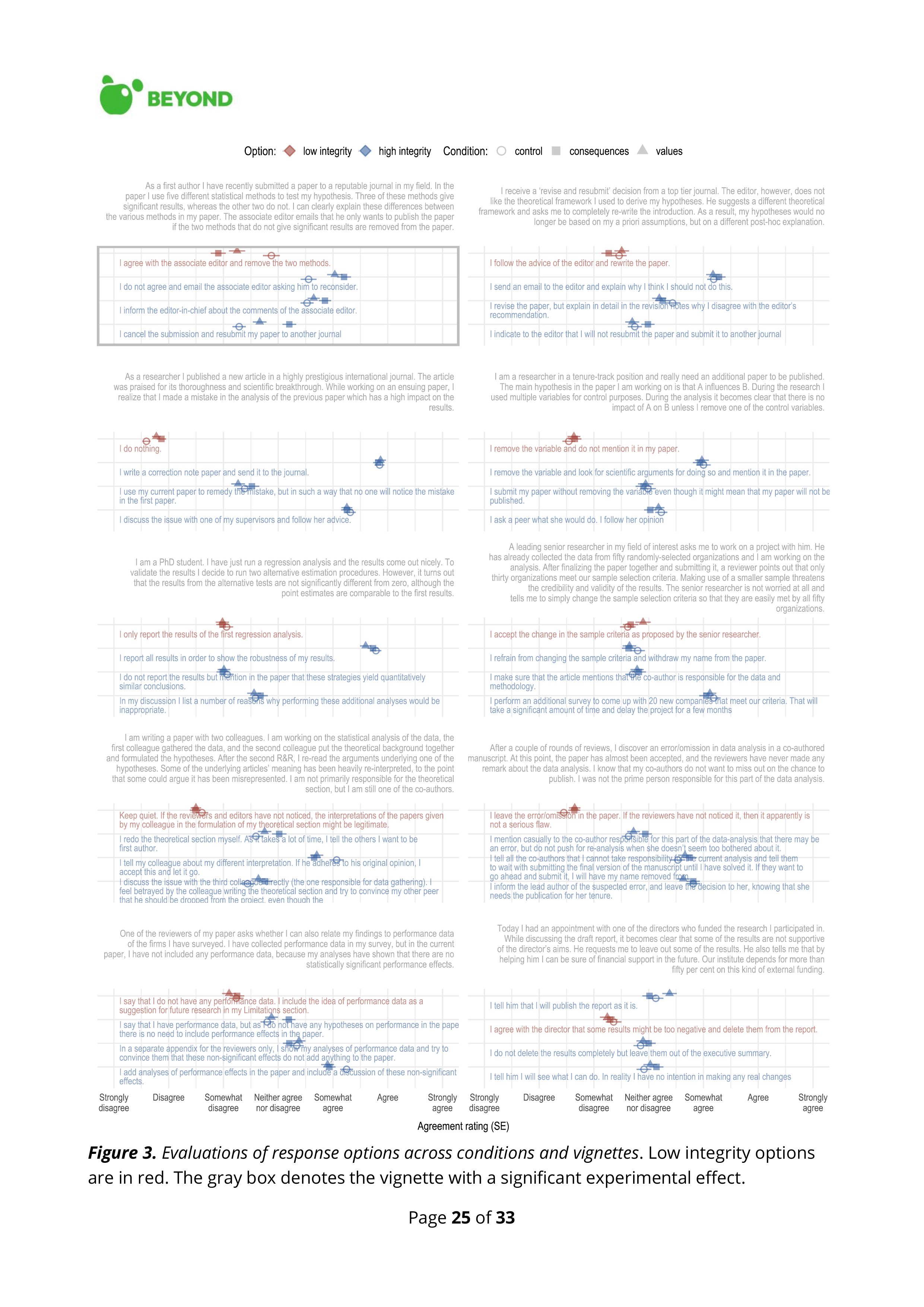
In almost every case, the most sacrificial answer, the one that the rest of society would call high integrity was not popular, taking one’s name off a paper, submitting to another journal, or attempting to publish a non-significant result.
These results shouldn’t surprise anyone who knows how the sausage is made and it shouldn’t have surprised the BEYOND project. In 2026, a study from the same EU funder found that only about 35% of researchers think p-hacking is unacceptable of which all of this is some form, from improper to extremely improper. 42% found manipulating data in a project proposal acceptable, one of the few of these practices that is, broadly speaking, illegal.

The BEYOND project, which is short for “beyond bad apples,” as if they knew what was coming, could have written a detailed preregistration predicting that the poll would turn out this way. Why didn’t they do that and end up being spectacularly right? Because this experiment was not intended to measure integrity. It measured whether integrity could be improved by... priming, one of the most ludicrous and thoroughly rejected hypotheses in all of science. No surprise, career-ending integrity was not improved by paragraphs of text.
If you really want a laugh, read how this experiment was described at the World Conference on Research Integrity, keeping in mind that the only positive result they found was on the scenario where they specifically asked participants to think about the scenario in different ways. It’s not even priming. They got a significant difference when they asked participants directly to produce a difference, and none otherwise.
That’s right. Researchers presenting at a scientific integrity conference studying how negative studies are spun into positive ones spun their predictably negative result into a positive one while papering over real integrity concerns revealed by their own direct measurement of integrity concerns. This was then papered over again by another conference on research integrity.
It’s worse because if most of the “high integrity” activities aren’t actually high integrity, then their other findings could easily reverse. For instance, they reported that people with more published papers have higher integrity.
All of this surprising behavior is explained by a simple fact: We greatly underestimate how strong incentives in science are. The incentives described in the scenarios are hell. They truly are. If you can imagine them being real and routine, then you might not need a scientist. You can answer the question yourself.
Did they redefine integrity? As it sounds like integrity like they defined it, has nothing to do with real life integrity.